


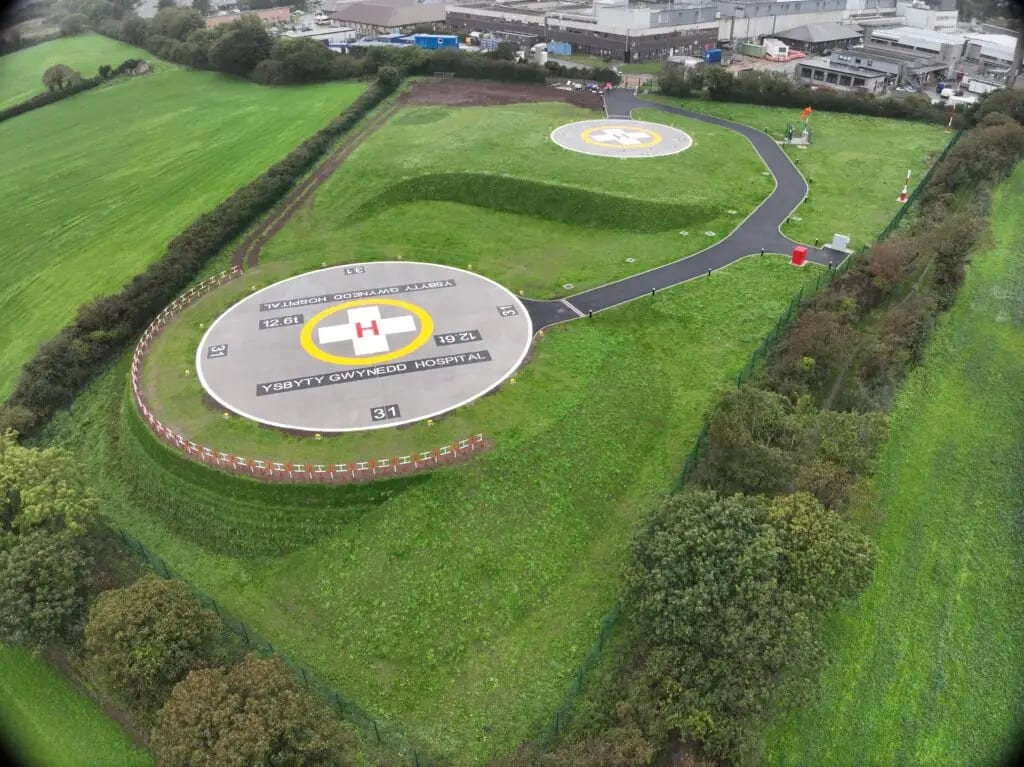
The UK's first dual helipad has been unveiled at Ysbyty Gwynedd in Bangor.
Work has been completed on the £2.3 million facility, which will be used by the Wales Air Ambulance and the Coastguard's search & rescue helicopters.
It replaces the hospital's former helipad, which has been used since 1997.
Emergency services and health authorities say the new development will strengthen emergency care for patients by reducing delays and strengthening the hospital’s response to major incidents and time-critical emergencies.
Dr Pete Williams, clincial lead at Ysbyty Gwynedd's emergency department, said: "We are seeing an increasing number of patients arriving or being transferred by helicopter, and there are occasions when more than one aircraft needs access to the hospital at the same time."
"Although these situations are relatively uncommon, they can result in delays when every minute matters."
"Having two fully operational helipads will remove the risk of one aircraft having to wait for another to leave, improving efficiency and providing greater resilience during periods of high demand or major incidents."
"Ultimately, this development is about improving patient care and ensuring that people can access the right treatment as quickly and safely as possible."
"While most people will thankfully never need to use these facilities, they provide a vital safety net for those facing the most serious medical emergencies. It's a fantastic development that will strengthen emergency care across North Wales for many years to come."

Over £1.5 million has been raised to build the new facility by the HELP Appeal, the UK's only charity dedicated to funding hospital helipads, with the Welsh Government providing around £800,000.
It has been designed to meet current and future standards set by the Civil Aviation Authority, while supporting both air ambulance and search & rescue operations in the region.
Robert Bertram, HELP Appeal chief executive, said: "This is a proud milestone for the HELP Appeal Charity, not only are we helping to fund Britain’s first dual hospital helipads, it’s also our first project in Wales."
"It brings the number of helipads we have funded to 55, helping air ambulances bring critically ill patients closer to the specialist care they urgently need."
"We owe a huge thank you to our supporters. Their generosity has made this possible and will help patients for years to come."
Health minister Mabon ap Gwynfor added: "The new dual helipad at Ysbyty Gwynedd - the first of its kind in Britain - is now open and will make a real difference to outcomes for seriously ill and injured patients."
"I'm proud that Welsh Government has worked on this vital project alongside the health board and the HELP Appeal."
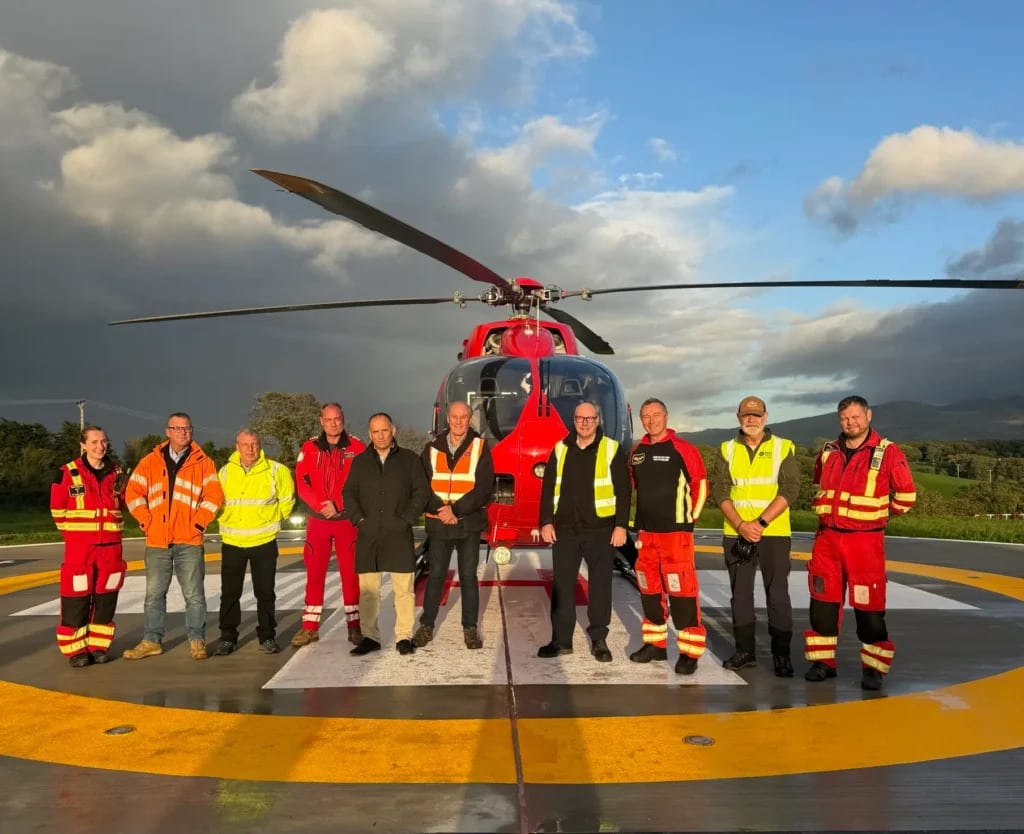
The Betsi Cadwaladr University Health Board (BCUHB) and emergency services also welcomed the dual helipad, which became operational last week.
Paul Andrew, operations director for the West Integrated Health Community, said: "We are incredibly grateful to the HELP Appeal for its generous support and commitment to improving emergency care, as well as (the) Welsh Government for its funding contribution."
"Without their support, this vital project would not have been possible."
"I would also like to thank everyone involved in bringing this development to fruition. It’s a fantastic investment in the future of emergency care in North Wales and one that will benefit patients, our clinical teams and emergency services for many years to come."
Deputy Chief Coastguard John Craig added: "This new site enhances access for search and rescue helicopters and highlights the close working between emergency services organisations for communities across North Wales."
Charlotte Phillips, aviation operations director for the Wales Air Ambulance, said: "As a charity, our focus is on delivering the best possible service for our population, so any development that can help improve patient care is wholeheartedly welcomed."



 Welsh parenting app wins top award
 More money for Slate Museum revamp
 Woman who spat at police officer jailed
 New support app for unpaid carers
 Defibrillators donated to traffic officers