Cyngor Gwynedd has become the first in Wales to adopt a new Welsh language charter for the workplace.
The 'Twf' charter was developed by TUC Cymru to help workers, their trade union branches and employers to work together to create bilingual workplacs.
The charter emphasises increasing the use of Welsh at work and ensuring workers can access trade union representation in their chosen language.
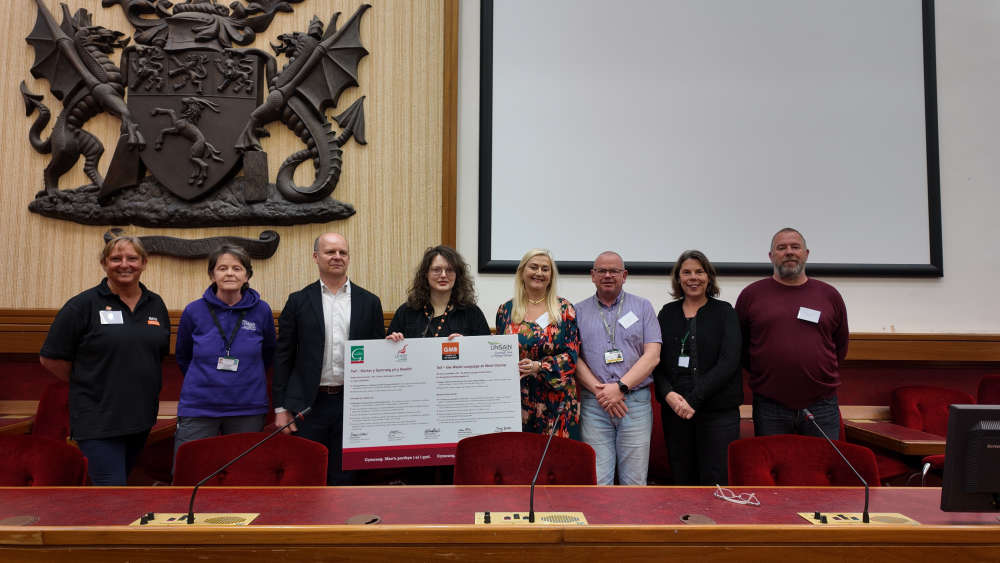
The county council formally signed the charter on Monday at the council chamber in Caernarfon in the presence of representatives of the TUC and the Unsion, GMB and Unite unions.
Cyngor Gwynedd leader Nia Jeffreys said: "The Twf charter brings together two movements that are close to my heart - the language movement and the trade unions movement."
"Emphasising the right for Council employees and the people of Gwynedd to use their language is extremely important, and that is what this charter does."
"I’m extremely proud that Cyngor Gwynedd is the first workplace in Wales to sign – the Twf Charter is incredibly important, and our aim is to see growth in the use of the language across all of the council’s work."
"I’d like to thank everyone who has been part of the process and for the opportunity to celebrate at this special event."
Under the charter, both the unions and the council have committed to work together on four core principles, including:
- Committing to grow the Welsh language in the workplace
- Creating a workplace culture that supports the use of Welsh
- Embedding a visible and inclusive bilingual ethos and culture
- Ongoing support for staff to learn and improve their Welsh language skills
Dr Mandy James, bilingual communications officer for TUC Cymru, said: "Siarter Twf and its principles will support Cyngor Gwynedd to work in social partnership with the trade union branches - Unsain, GMB and Unite - to create an inclusive Welsh workplace and growth in the use of Cymraeg at work."
"Trade unions have a critical role in delivering on linguistic justice for workers in Wales; safeguarding and promoting workers’ Welsh language rights as a matter of fairness, equality and equity; and ensuring that workplaces are safe and free from prejudice and judgement."
"Unions support members and workers to identify, organise and secure more opportunities for everyone to increasingly use Welsh at work, and develop their Welsh language skills."
"Using the Welsh language is a valuable and practical skill in the workplace and enriches our social life and communities in Wales."
"The Twf Charter will assist with planning and ensuring that the inclusive Welsh and bilingual workplaces of the future are spaces where all workers can use their valuable bilingual skills."
Cyngor Gwynedd says ensuring all services are avaialble in Welsh has been one of its main priorities since its formed, along with promoting and supporting the use of Welsh by its staff.
Already 99.1% of the local authority's staff have Welsh language skills.
Cllr Llio Elenid Owen, cabinet member with responsibility for the Welsh language, said: "The principles demonstrate a commitment to working in partnership in providing an inclusive bilingual workplace and to promote and enable growth in the use of the Welsh language at work."
"I hope that other organisations will soon follow Cyngor Gwynedd in adopting and signing the charter."
To mark the occasion, a special englyn was commissioned by poet Meirion Macintyre Huws, which was read at the end of the signing ceremony.
“Awn â gwên i'n llefydd gwaith, - yn drindod
Drwy undeb cawn effaith;
Awn i hybu'n y gobaith
O'u troi oll yn gartra' i'r iaith.”


 Student drowned in Glaslyn lake - inquest
 Work resumes on third Menai crossing - minister
 Aussie adventures inspire new exhibition
 Llanddwyn access road to close for works
 Bangor: new bid to find baby girl's mother