



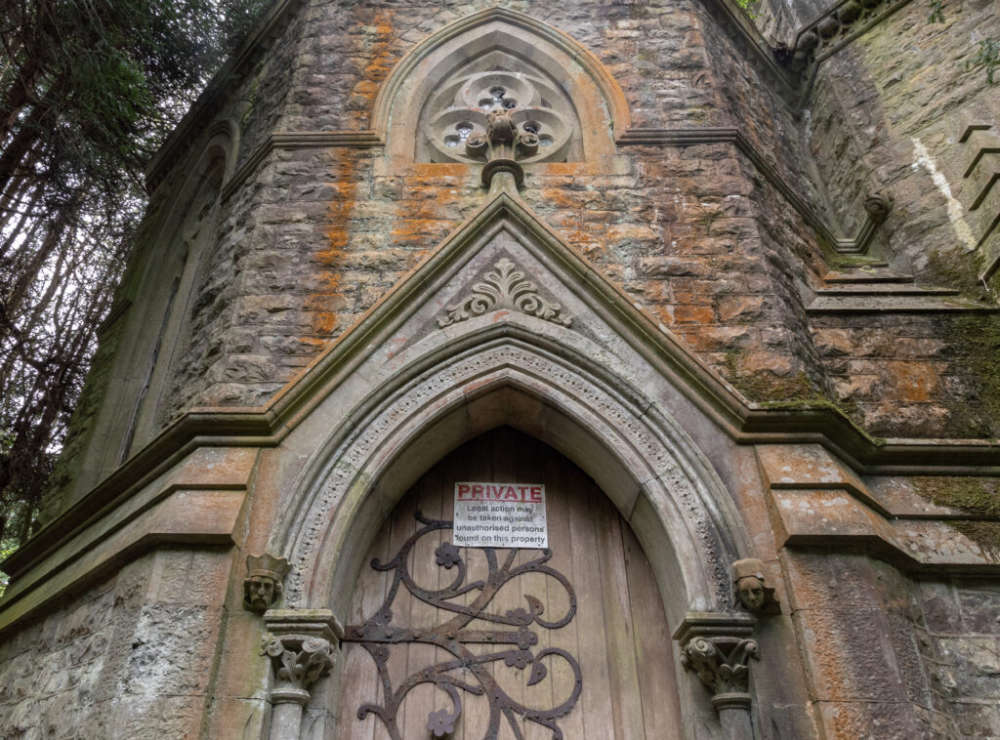
A Grade II-listed mausoleum near Y Felinheli has been named as one of the ten most endangered buildings in Wales and England.
The tomb was originally built on the Faenol estate in the late 1870s by leading local architect Henry Kennedy for the Assheton-Smith family.
But the Victorian Society says years of neglect - and ownership issues - have left the building in a state of decay and at risk of further deterioration.
The mausoleum is the only Welsh building featured on this year's list, drawn up from public nominations, which also includes such landmarks as the Tees Transporter Bridge in Middlesbrough and the Derby School of Art.
Actor Gruff Rhys Jones, president of the Victorian Society, said: "What an extraordinary find and one that anyone walking the nearby great coastal path of Wales would be overjoyed to stumble on and explore and rest a while."
"This is such a familiar story. The tangle of ownership needs to be cut aside by a latter-day perfect gentle knight, so this sleeping beauty, this unique monument, can come back to life."
When the mausoleum was built, the Faenol estate extended to around 36,000 acres - and its owners, a powerful local dynasty, were responsible for most of the UK's slate production through their close links with the slate quarry at Dinorwig.
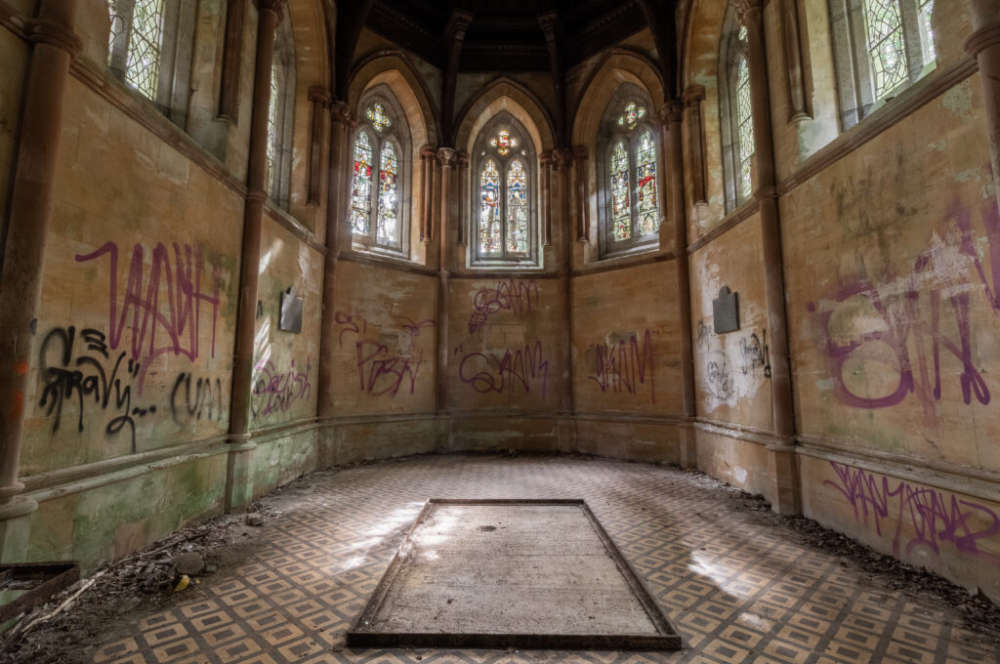
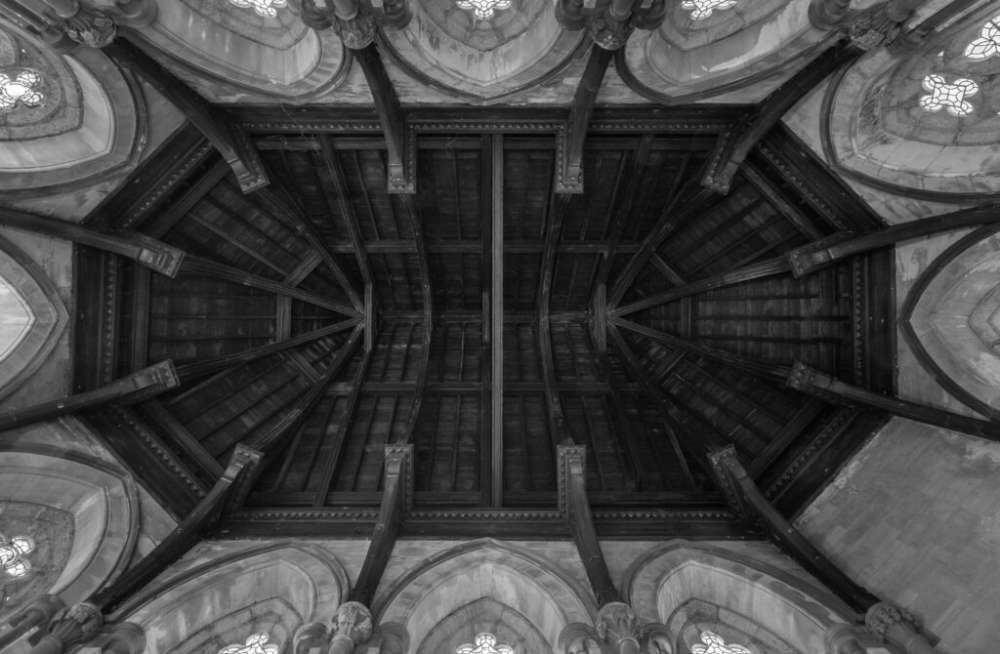
The design, reflecting Kennedy's extensive ecclesiastical work, includes French Gothic elements such as a bell tower and a striking interior with a hammerbeam roof.
The decorative carving was carried out by Robert Evans of Menai Bridge and the stained glass is believed to be the work of James Powell & Sons.
It was in the tomb that members of the Assheton-Smith family were interred, including Captain Robert Geoge-Duff, whose body was bought home from the Isle of Wight in 1890.
George William Duff Assheton-Smith was buried in 1904 - having inherited the estate when he was a boy, his final resting place followed a large and elaborate funeral procession attended by tenants, quarry workers and household staff.
His widow, Laura, was laid to rest in 1940, followed by Enid - their daughter - in 1959. She had cut the first sod when construction work got underway for the Snowdon Mountain Railway - and in tribute, one of its first locomotives was named after her.
Since her death, the Faenol estate has been reduced and size with parts playing host to key events such as the National Eisteddfod in 2005, Bryn Terfel's Faenol Festival and BBC Radio 1's Big Weekend in 2010.
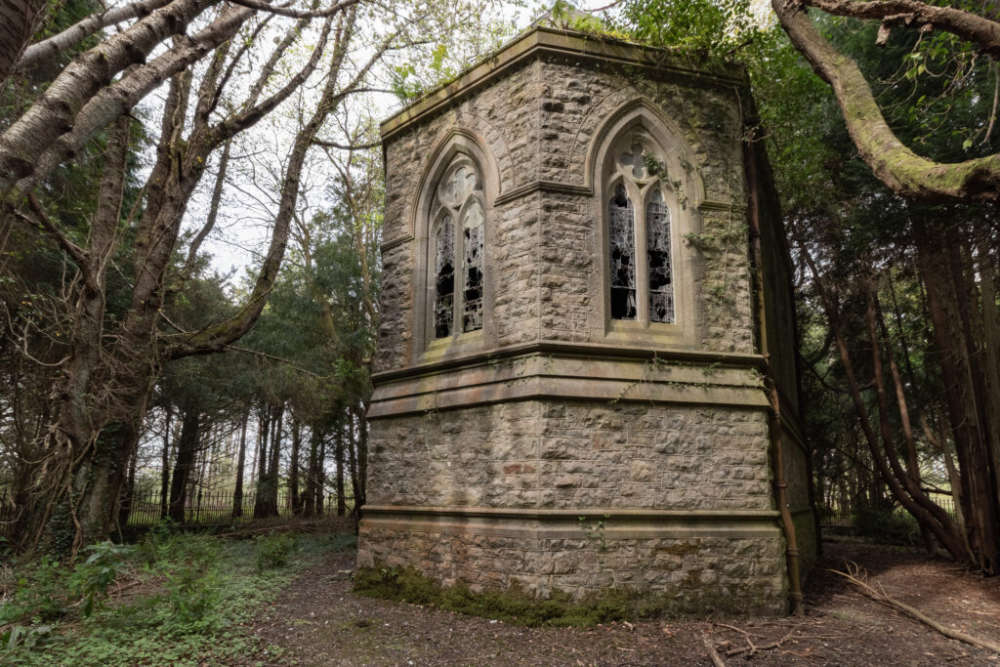
But despite the establishment of the Wales Coastal Path which runs nearby, the mausoleum - which now falls under separate ownership - has fallen victim to vandalism with its stained glass damaged and grafitti also in evidence on its walls.
The Victorian Society argues that the mausoleum has "clear potential to be appreciate once again" and is calling for action to be taken to address its condition and ensure it can be conserved and, if possible, made accessible.
James Hughes, director of The Victorian Society, said: "This is a rare and evocative building that forms part of the historic fabric of the wider landscape."
"Its current condition is a direct result of fragmented ownership and a lack of co-ordinated care. With the right intervention, it could once again become a valued and accessible heritage asset."
The top ten list includes eight Grade II listed buildings in total - but the society says listing has not been enough to secure their survival and points towards a "strong track record" with many previously listed buildings saved through public pressure, partnership and investment.
James Hughes added: "This year’s list demonstrates both the richness of our Victorian and Edwardian heritage and the scale of the ongoing challenge in securing its future."
"These buildings were created with foresight, ambition and a strong sense of civic purpose. Too often today they are left without clear ownership, investment or direction. With the right commitment, every one of them could have a viable future; what is needed now is the will to act."
Gruff Rhys Jones added: "As I always find, these buildings reflect an incredible range of styles and social awareness."
"They exemplify Victorian ideals. Railways, markets, art schools, institutes, monuments to the dead, chapels and even a transporter bridge: they all become intriguing as soon as you start to examine their stories."
"They take us straight into the age which provided the building blocks for the society we live in today. So many are the infrastructure projects of the Victorian era. Some are still in use. All are great buildings, executed on demand and with care and foresight."
"They not only tell the story of our country, they were usually constructed with such strength and integrity that they can continue in service today. There is no building here that cannot be recycled."



 Student drowned in Glaslyn lake - inquest
 Work resumes on third Menai crossing - minister
 Aussie adventures inspire new exhibition
 Llanddwyn access road to close for works
 Bangor: new bid to find baby girl's mother