


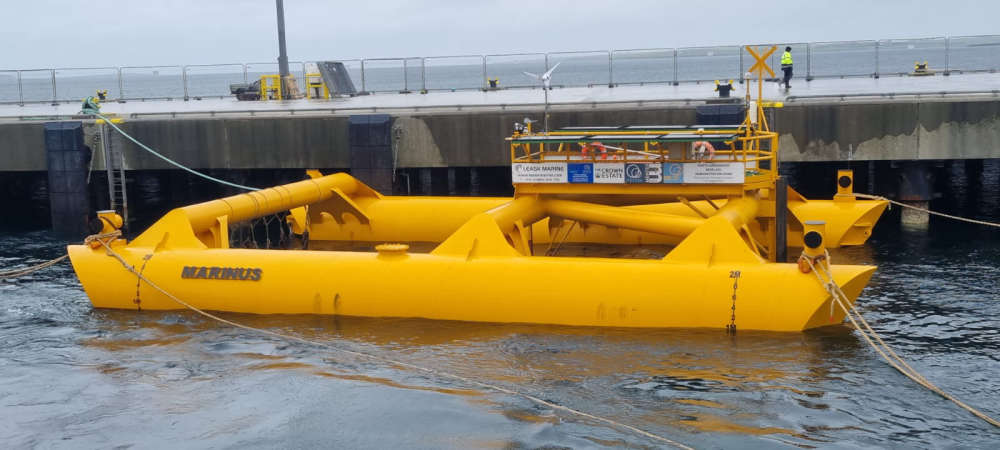
A monitoring buoy used as part of the Morlais tidal energy scheme off the coast at Holyhead has been removed after two years.
The Marinus has been used since 2024 for tracking mammals and birds as part of the Marine Characterisation Research Project (MCRP) led by Menter Môn.
Among its key achievements, it recorded the first confirmed dolphin encounter using a cominbation of innovative sensors, including machine-learning technology that can classify observations.
Last week, the Marinus buoy was removed at the end of the data-gathering phase ahead of the deployment of tidal turbines.
It's hoped the first devices will start generating clean electricity as early as next year.
Helen Roberts, environment and compliance project manager at Menter Môn said: "We are proud that we have been able to bring the Marinus to north Wales and work with respected partners to deliver world leading monitoring technology that may be able to accelerate consenting across the industry in the UK and globally."
"The data we have gathered will help ensure that tidal energy devices within the Morlais zone can be deployed safely."
"From sonar and acoustic sensors to video and AI-driven monitoring, we have used technology not trialled elsewhere – and all as part of our commitment to protecting local marine wildlife."
"We’re now focused on the next phase and hope the tools and methodologies used at our site can be adapted for wider use, including in offshore wind and other industries looking to understand and reduce their impact on marine wildlife."
"We’re looking forward to building on the legacy of this research stage and the work we have done so far."
Menter Môn says the data gathered by the Marinus - and shared with the Crown Estate's marine data exchange - will be vital to protecting wildlife as the Morlais scheme progresses.



 Student drowned in Glaslyn lake - inquest
 Work resumes on third Menai crossing - minister
 Aussie adventures inspire new exhibition
 Llanddwyn access road to close for works
 Bangor: new bid to find baby girl's mother